Groundwater levels follow seasonal decline in dry-zone areas
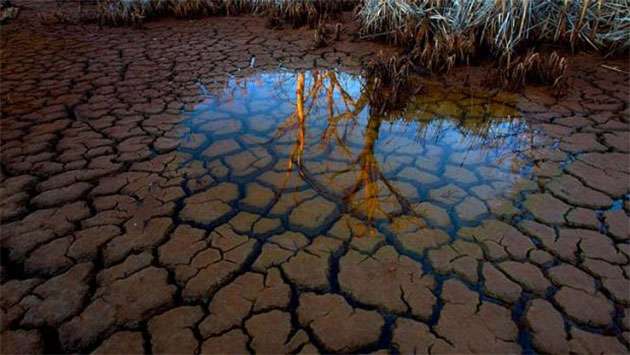

– Groundwater levels in several dry-zone areas of Sri Lanka are showing their usual seasonal decline, with the most significant reductions being recorded in Kalpitiya and the Jaffna Peninsula, according to the Water Resources Board.Water Resources Board Assistant General Manager (Research and Development), Ruwan Rajapaksha said groundwater levels generally decline during the drier months, with the reduction becoming more pronounced around August in areas that receive relatively low rainfall.“If we look at the climatic behaviour from December through March and April and then up to August, there is generally a decrease in groundwater levels around August,” he said.
According to available data, groundwater levels in some parts of the Jaffna Peninsula and Kalpitiya have currently fallen by around 70 to 80 per cent from their maximum seasonal levels. Rajapaksha clarified that this percentage refers to the reduction from the highest groundwater level recorded during the wet period, rather than an 80 per cent depletion of the total groundwater resource. “For example, a groundwater level that may be observed at around two metres during a high-water period could fall by approximately 1.5 metres during the dry period,” he explained.The decline in these areas is largely linked to lower rainfall, with similar reductions recurring in line with seasonal climatic patterns. Rajapaksha stressed that such fluctuations do not necessarily indicate that Sri Lanka’s groundwater resources are being uniformly depleted. “Groundwater levels naturally rise and fall in response to rainfall and dry periods,” he said.
However, he cautioned that groundwater extraction can further influence these levels, particularly in areas where water use is high. The amount of groundwater that can be extracted should therefore be determined through scientific assessments. “If groundwater is used more in a particular region, that will naturally have an impact in that area,” Rajapaksha said.
The Water Resources Board currently monitors groundwater levels across the country through a network of around 1,600 observation points, of which approximately 190 are equipped for real-time monitoring.Manual groundwater measurements are generally carried out between March and April and again from June to September. However, because these measurements are taken periodically, they may not capture short-term changes or variations in groundwater behaviour at a high resolution.To improve monitoring, the Water Resources Board has introduced a real-time monitoring pilot project in several areas, including Point Pedro in Jaffna, the Puttalam region, Mannar, Kumbukkan Oya and Maduru Oya, which allows groundwater levels in these locations to be observed more frequently and provides a clearer picture of short-term changes.
Meanwhile, Rajapaksha warned that excessive and unregulated groundwater extraction could eventually lead to wider environmental and water-quality problems. This is of particular concern in Jaffna, where groundwater is the main source of water for many. The widespread construction of tube wells and pumping of large volumes of groundwater could place additional pressure, particularly if extraction exceeds the amount that can be naturally replenished. “If water is extracted unnecessarily and in excessive quantities, the balance of the system can be affected,” he said.
Comments – 1
Recommended







You May Also Like

Trending