J
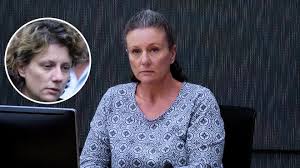
A woman condemned as Australia’s worst female serial killer has been pardoned after serving 20 years behind bars for killing her four children in what appears to be one of the country’s gravest miscarriages of justice.
New South Wales Attorney General Michael Daley intervened to order Kathleen Folbigg be freed, based on the preliminary findings of an inquiry that had found “reasonable doubt” as to her guilt for all four deaths.
Daley told a news conference Monday that he had spoken to the governor and recommended an unconditional pardon, which had been granted, and she would be released from Clarence Correctional Center the same day.
“This has been a terrible ordeal for everyone concerned and I hope that our actions today can put some closure on this 20-year-old matter,” said Daley, who added that he had informed Craig Folbigg, the babies’ father, of his decision. “It will be a tough day for him,” he said.
Kathleen Folbigg was jailed in 2003 on three counts of murder and one of manslaughter following the deaths of her four babies over a decade from 1989. In each case, she was the person who found their bodies, though there was no physical evidence that she had caused their deaths.
Instead, the jury relied on the prosecution’s argument that the chances of four babies from one family dying from natural causes before the age of 2 were so infinitesimally low as to be compared to pigs flying.They also noted the contents of her diary, which contained passages that in isolation at the time were interpreted as confessions of guilt.
As recently as 2019, an inquiry into her convictions found there was no reasonable doubt she had committed the crimes. But another inquiry began last year after new scientific evidence emerged that provided a genetic explanation for the children’s deaths.In her closing submissions, Sophie Callan, the lead counsel assisting the inquiry, said that “on the whole of the body of evidence before this inquiry there is a reasonable doubt as to Ms Folbigg’s guilt.”
She also told the inquiry that in its closing submissions, the NSW director of public prosecutions had indicated she was also “open to the Inquiry to conclude there is reasonable doubt as to Ms Folbigg’s guilt.”