Sri Lanka’s electricity regulator has approved an 18% tariff increase for high-consumption domestic users and several business-related sectors, with the revised rates set to take effect from May 11, 2026.
The Public Utilities Commission of Sri Lanka (PUCSL) announced that households consuming below 180 electricity units per month will not face any increase under the new revision.
According to the PUCSL, around 95% of electricity consumers will not be affected by the tariff hike due to the Government’s Rs. 15 billion subsidy targeting lower consumption categories.
Under the revised structure, domestic consumers using more than 180 units per month will face an 18% increase in their electricity bills.
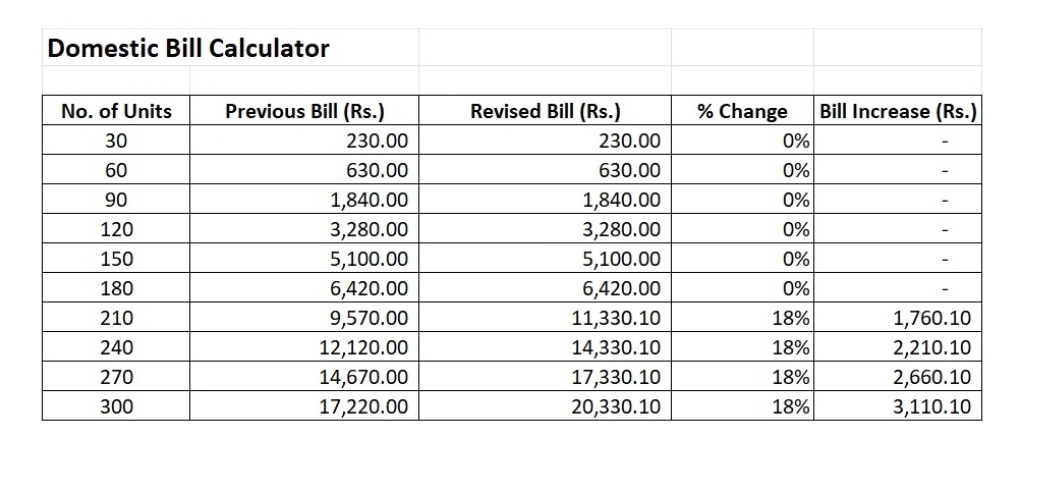
PUCSL released sample calculations showing:
A household consuming 210 units will see the bill increase from Rs. 9,570 to Rs. 11,330.
A 240-unit bill will rise from Rs. 12,120 to Rs. 14,330.
A 270-unit bill will increase from Rs. 14,670 to Rs. 17,330.
A 300-unit bill will rise from Rs. 17,220 to Rs. 20,330.
This means a consumer currently paying around Rs. 14,000 could see the monthly bill increase to nearly Rs. 17,000 under the revised tariff.
The increase will also apply to:
High consumption domestic and religious premises categories above 180 units
Public utilities subcategories 2 and 3
Government institution categories 1, 2 and 3
Hotel sector subcategories 2 and 3
Industrial sector subcategories 2 and 3
However, PUCSL said there will be no increase for:
Domestic and religious consumers below 180 units
Small and medium-scale businesses under the first category of the industrial, hotel and public utility sectors
The regulator said the tariff revision was based on cost estimates submitted by the National System Operator (NSO) on April 28, 2026, along with public consultations and the Government’s subsidy policy.
PUCSL also announced several regulatory directives alongside the tariff revision, including:
Legal action over violations related to fuel procurement directives
A public hearing on transparency in fuel pricing for power generation
Orders requiring private power plants to adopt transparent fuel pricing mechanisms
Mandatory Power Purchase Agreements (PPAs) and Power Supply Agreements (PSAs) to be finalized before September 9, 2026
The Commission further directed the NSO to revise Sri Lanka’s generation plan by the end of 2026 to eliminate oil dependency in the electricity mix by 2030 and promote renewable energy targets.
PUCSL also stated that additional power generation costs arising from coal-related issues will not be passed on to consumers through electricity tariffs.