

Peradeniya Professor barred from academic posts over sexual harassment allegations
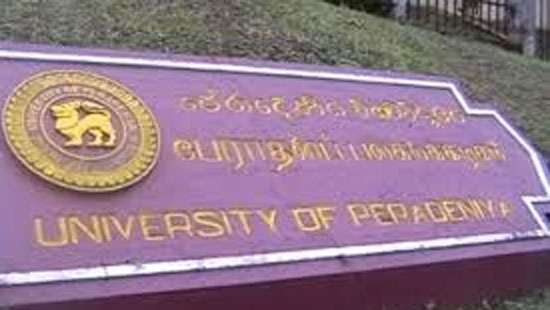
– The Supreme Court directed the University Grants Commission (UGC) to bar a Professor attached to the University of Peradeniya from receiving any appointment, whether paid, unpaid or honorary, in any university or academic institution under its purview, following allegations of sexual harassment and emotional abuse of a junior lecturer.
The order was made by a three-judge bench of the Supreme Court comprising Justices Janak De Silva, Achala Wengappuli and K. Priyantha Fernando while hearing a Fundamental Rights petition filed by a female academic attached to the Faculty of Dental Science of the University of Peradeniya.The Supreme Court ordered the UGC to issue directions to all universities and institutions under its authority to refrain from offering the respondent professor any position in the future.
The apex court also directed the University of Peradeniya and its Council to strengthen the implementation of the university’s policy on Sexual or Gender-Based Harassment and Sexual Violence. The Court ordered the university to raise awareness among staff and students and conduct mandatory annual seminars for academics, non-academic staff and students.The petitioner, a Dental Surgeon and Senior Lecturer Grade II attached to the Department of Oral Pathology at the Faculty of Dental Science, stated that the incidents occurred when she was serving as an Assistant Lecturer under the supervision of the respondent professor, who was also her co-supervisor for her M.Phil degree.
The court records revealed that on June 2, 2018, the petitioner’s mother lodged a written complaint with the Vice Chancellor of the University of Peradeniya alleging that the professor had sexually harassed and emotionally abused her daughter between July 1, 2017 and April 30, 2018.A preliminary investigation committee appointed by the university subsequently recommended a formal disciplinary inquiry into the allegations. Thereafter, a charge sheet was served on the respondent professor on January 18, 2019.
The formal inquiry committee, consisting of three members, later found the professor guilty on several charges, including charges 03, 04(a), 04(b), and charges 05 to 11, while acquitting him of charges 01, 02, 04(c) and 04(d).However, when the inquiry report was tabled before the University Council on May 30, 2020, the Council decided to reject the committee’s findings against the professor.
In a subsequent communication, the Council informed the petitioner that no action would be taken against the respondent and stated that she may seek redress before an appropriate forum.The petitioner thereafter filed a Fundamental Rights application before the Supreme Court, alleging that the Council’s decision was based on irrelevant considerations and violated her legitimate expectations and fundamental rights.In its judgment, the Supreme Court made extensive observations regarding workplace sexual harassment and hostile working environments.“Sexual harassment includes such unwelcome sexually determined behavior as physical contact and advances, sexually colored remarks, showing pornography and sexual demands, whether by words or actions. Such conduct can be humiliating and may constitute a health and safety problem; it is discriminatory when the woman has reasonable ground to believe that her objection would disadvantage her in connection with her employment, including recruitment or promotion, or when it creates a hostile working environment,” the Supreme Court observed.
Comments – 1
Recommended

 0
0

You May Also Like
Trending