
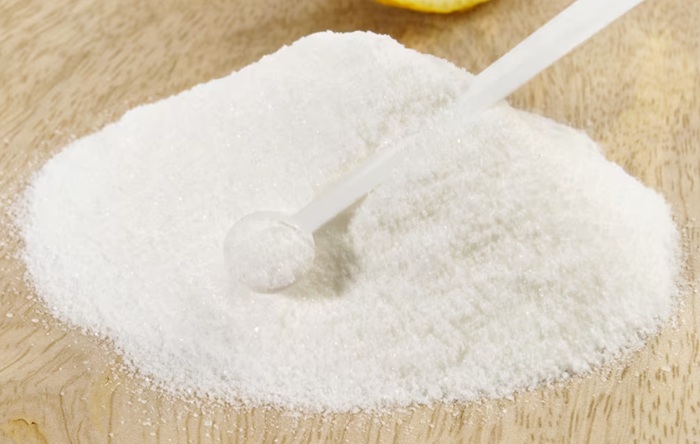
Common preservatives used in many store-bought foods to kill bacteria and mold were linked to a 29% greater risk of elevated blood pressure and a 16% higher risk of heart attacks and stroke, according to a new study from France.
Even so-called “natural” antioxidant preservatives used to stop discoloration, such as citric acid and ascorbic acid (widely known as vitamin C), led to a 22% greater risk of high blood pressure in people who ate more foods with those ingredients, the research found.
While antioxidants such as citric and ascorbic acid are found naturally in foods such as fruits, they are “not exactly natural” when used as preservatives, senior author Mathilde Touvier said in an email. Touvier is the principal investigator of the NutriNet-Santé study used to conduct the research.
“Naturally occurring ascorbic acid and added ascorbic acid — which may be chemically manufactured — may have different impacts on health,” said Touvier, who is also director of research at France’s National Institute of Health and Medical Research in Paris.
“Thus, the results observed here for these food additives are not true for natural substances found in fruits and vegetables,” she added.
Not only ultra processed foods The study sheds light on how different additives in ultraprocessed foods, or UPFs, could play a role in cardiovascular risk, and “echo the recent European Society of Cardiology consensus, which highlights UPFs as a global public health concern,” Tracy Parker, nutrition lead at the British Heart Foundation in London said in a statement. Parker was not involved in the study.
Ultraprocessed foods have been linked to an approximately 50% higher risk of cardiovascular disease-related death, and they may boost the risk of obesity by 55%, sleep disorders by 41% and the development of type 2 diabetes by 40%. Obesity, diabetes and poor sleep are closely connected to poor heart health.“This is one of the first large studies to look at individual preservatives rather than treating ultra-processed foods as a single category,” Parker said. “UPFs have long raised concerns due to their high levels of sugar, salt and fat, but these factors alone have never fully explained why they appear more harmful than their nutrient profile suggests. These findings help fill part of that gap.”
However, prior research by Touvier and her team found ultraprocessed foods make up only 35% of foods with preservatives people consumed. That means “preservatives are ubiquitous,” said lead author Anaïs Hasenböhler, a doctoral student at the Nutritional Epidemiology Research Team at the Université Sorbonne Paris Nord.“There is no food group/item to remove from the diet in order to fix things,” Hasenböhler said in an email. “These results also support the recommendations for consumers to favour non-to-minimally-processed foods.”Choose fresh, uncooked, unprocessed items, or if looking for the fastest to prepare and eat, choose “frozen options which are preserved through a low temperature, not necessarily through the addition of food additive preservatives,” she added.